Urban Development & Revenue
LandPass AP
A land-use conversion certificate anyone can check, and a revenue record that cannot quietly fall behind it.
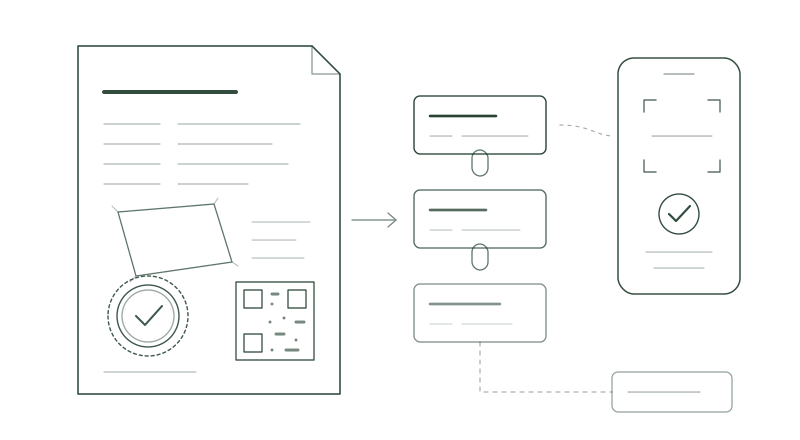
When agricultural land is converted, the payment, the planning office’s decision and the revenue record sit in different places, so a plot can be charged and never certified, or certified and never updated in Webland. LandPass records each conversion against its evidence, runs the checks a planning officer would, issues a signed certificate, and opens a task for the Tahsildar to update the record.
Key Capabilities
How It Works
Conversion Recorded
The planning office enters the parcel, the proposed use and the evidence
Checked
Nine checks run; a failure blocks the file, a doubt goes to an officer
Certificate Issued
Signed with the office’s key and written to the ledger
Record Updated
The Tahsildar receives a task to update Webland, and closes it
Verified Publicly
A buyer, a bank or a citizen scans the QR or enters the number
Who It's For
Impact & Value
- A charge paid with no certificate behind it is surfaced, not discovered years later
- A certificate no longer stands apart from the revenue record: an update task follows it
- A buyer or a bank can check a certificate without calling the office
- Every check, and who settled every doubt, is written on the file
- A file pending when an office is reorganised is flagged, not orphaned
Security & Compliance
- Ledger entries and certificate contents cannot be edited, because the database refuses it; a revocation is a new entry, not a change
- Each office signs with its own key, and the public keys are published so a certificate can be checked independently
- Names and mobile numbers masked on every public page
- Role and office competence checked inside every operation, not only at sign-in
LandPass is a pilot running on sample data for the Tirupati and Chittoor districts. A certificate it issues has no legal effect until the system is adopted by a Government Order, and every certificate says so on its face. Webland is not yet integrated: the system creates and tracks the update task, but the Tahsildar still makes the change in Webland itself.
Deployment Models
Ready to put a certificate behind every conversion?
Tell us which planning office you run and how a conversion reaches the revenue record today. We can walk a full conversion through (evidence, checks, certificate and record task) on sample data from Tirupati and Chittoor.