Public Health
PCOS Screening Support
Getting the right patients to the right clinic sooner.
PCOS is badly under-diagnosed, and the reason is structural. Confirming it needs imaging and laboratory work that exists at district level, while first contact happens at a primary health centre or with a health worker in the field. Women with clear symptoms go years without a referral. This is a referral aid — not a diagnosis — built to close that gap.
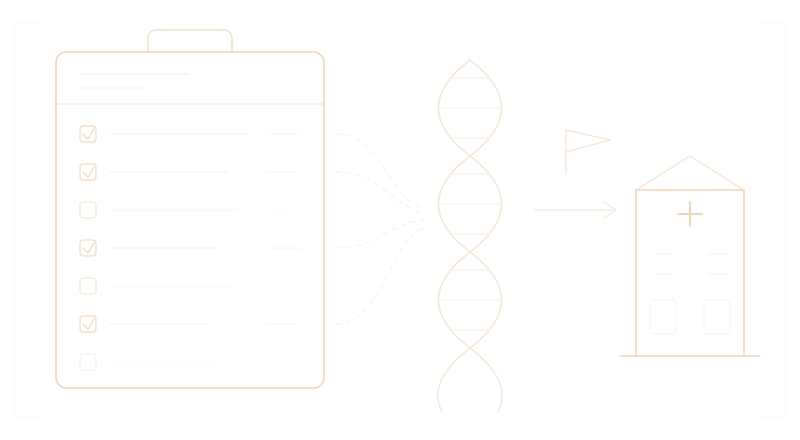
This one is not deployed and should not be. It goes nowhere near a patient until it has been validated with a clinical partner and cleared by an ethics board. We are listing it because the problem is real and the approach is sound, not because it is ready. Any accuracy figure quoted before that validation would be meaningless.
Key Capabilities
How It Works
Intake
The indicators from a routine visit, as already written down
Prepare
Gaps handled so an incomplete record still scores
Screen
A likelihood, not a verdict, for this patient
Prioritise
Who to send for imaging and hormone work first
Confirm
A clinician at district level makes the diagnosis
Who It's For
Intended Impact
- Points limited specialist capacity at the patients most likely to need it
- Turns a routine visit into a referral signal, with no new equipment
- Shortens the years between first symptom and first referral
- Earlier intervention on a condition linked to infertility and diabetes
- Usable by a health worker with fifteen minutes per patient
Limits & Compliance
- A referral aid, never a diagnosis — a clinician decides
- Not a certified medical device and not validated for clinical use
- Trained on one dataset, not a state-representative population
- Any deployment touching patient records needs data-protection compliance and ethics approval
For a referral screen, overall accuracy is close to meaningless — a model that calls everyone healthy can score well and refer nobody. The number to hold us to is recall on the positive class: of the women who do have it, how many did we flag. That is what we intend to publish once there is an honest evaluation behind it.
Deployment Models
We are looking for a clinical partner
What this needs next is not more engineering — it is a hospital or medical college willing to validate it against real diagnoses. If that could be you, we would like to talk.