Public
Speed Detection
Speed enforcement from the cameras that are already there.
Enforcing a limit normally means buying dedicated equipment and putting an operator behind it, which is why most of a corridor goes unwatched and only a handful of points are ever covered. This reads speed out of ordinary traffic footage instead, so coverage becomes a software question rather than a procurement one.
Key Capabilities
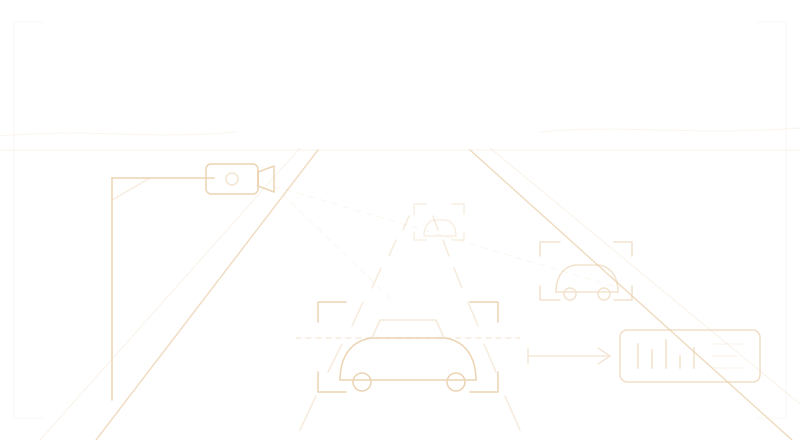
How It Works
Feed In
Footage from a camera already mounted at the site
Detect
Vehicles are picked out as they enter the frame
Track
Each keeps its own identity across the scene
Measure
Ground covered over time becomes a speed
Record
The reading is written onto the footage as evidence
Who It's For
Impact & Value
- Existing camera infrastructure becomes a network of speed sensors
- Another stretch of road costs a video feed, not a roadside unit
- Continuous coverage instead of a few manned points
- Annotated video accompanies every reading
- Archived footage can be reviewed after the fact
What It Is Not
- Accuracy depends on per-site calibration — every camera angle needs measuring
- A prosecutable penalty needs a certified measurement chain; this is not that yet
- Night and low-contrast conditions have not been validated
The honest first deployment is not enforcement — it is measurement. Use it to find out which stretches and which hours actually carry speeding, and let that decide where certified equipment is worth installing. That is a real result on day one, without claiming a legal standard we have not earned.
Deployment Models
Send us an hour of footage
The fastest way to know whether this works on your corridor is to run it on your own camera feed. Send a sample and the site geometry, and we will show you what comes back.